What is Tool Hookup in Semiconductor Fabs?
l factor in the operational efficiency and success of a semiconductor fab. Properly hooked-up tools ensure:
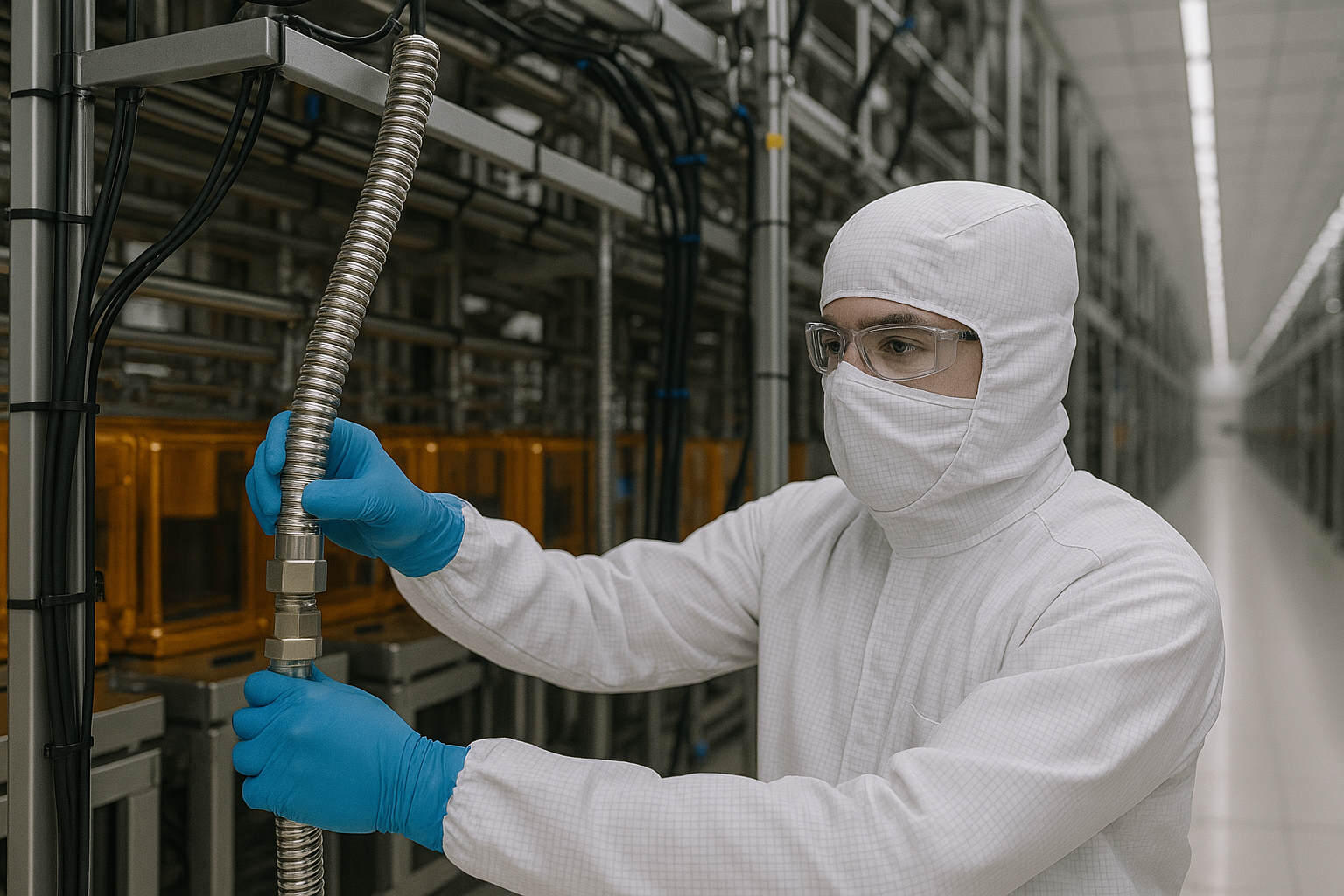
Semiconductor manufacturing depends on precision, cleanliness, and tightly controlled conditions, and the equipment that enables it must be connected correctly from day one. Tool hookup is the process of connecting the equipment to the gas, chemical, vacuum, drain, electrical, and data systems it needs to operate.
The term refers to installing process tools and integrating them with the fab's utility systems. Lithography machines, etchers, deposition systems, and inspection tools all perform the microfabrication steps that build circuits onto a wafer. None of the systems can operate until they are connected to gases, chemicals, power, water, exhaust, vacuum, and the fab's control network.
Here is a closer look at what tool hookup covers and why it matters.
Key Components of Tool Hookup
Tool hookup covers the connection of several distinct utility systems.
Process Gases
Semiconductor tools rely on ultra-pure process gases for deposition, etching, and other chemical steps. Hookup involves connecting tools to gas lines and confirming proper pressure, purity, and flow.
Chemical Distribution
Liquid chemicals used in cleaning and etching are delivered through dedicated distribution systems separate from process gases. Hookup covers supply and return connections, material compatibility, and containment.
Power and Electrical Systems
Semiconductor tools require stable, often high-power electrical connections. Hookup involves confirming proper voltage, grounding, and uninterrupted power supply to prevent damage to sensitive equipment.
Ultra-pure Water (UPW) Systems
UPW is used for rinsing and cleaning at the purity levels semiconductor processing requires. Tools are connected to UPW distribution to meet the fab's cleanliness standards.
Vacuum Systems
Many process tools operate under vacuum or require house vacuum for wafer handling and transfer. Hookup involves connecting vacuum lines and verifying that the tool can reach and hold the pressures without an issue.
Exhaust Systems
Exhaust systems remove hazardous gases and byproducts from tools during operation. Proper hookup keeps those systems compliant with environmental and safety regulations.
Cooling and Temperature Control
High-precision tools generate significant heat. Connections to cooling systems, such as chilled water or process cooling water (PCW), prevent overheating and maintain operational stability.
Data and Control Systems
Many tools integrate with the fab's central control and monitoring systems. Hookup includes connecting communication lines, sensors, and automation systems so the tool can be monitored and adjusted in real time.
Why Tool Hookup Matters
Tool hookup is a technical process, and the quality of the work shows up directly in how the fab runs. Properly connected tools support:
Operational efficiency. Reliable connections minimize downtime and production interruptions.
Product quality. Precise installations reduce contamination and defects in finished chips.
Safety. Correct hookups lower the risk of leaks, electrical faults, and other hazards.
Equipment longevity. Following manufacturer specifications during hookup extends the working life of the tools.
In Summary
Tool hookup connects advanced process equipment to the infrastructure that makes it usable. It takes technical expertise, careful planning, and strict adherence to safety and cleanliness standards. As fabs continue to add capacity and adopt new process nodes, demand for precise hookup work grows with them.
For a look at where hookup sits within the wider construction schedule, see How Tool Hookup Fits into the Semiconductor Construction Timeline.