Essential PPE for Tool Hookup in Semiconductor Fabs
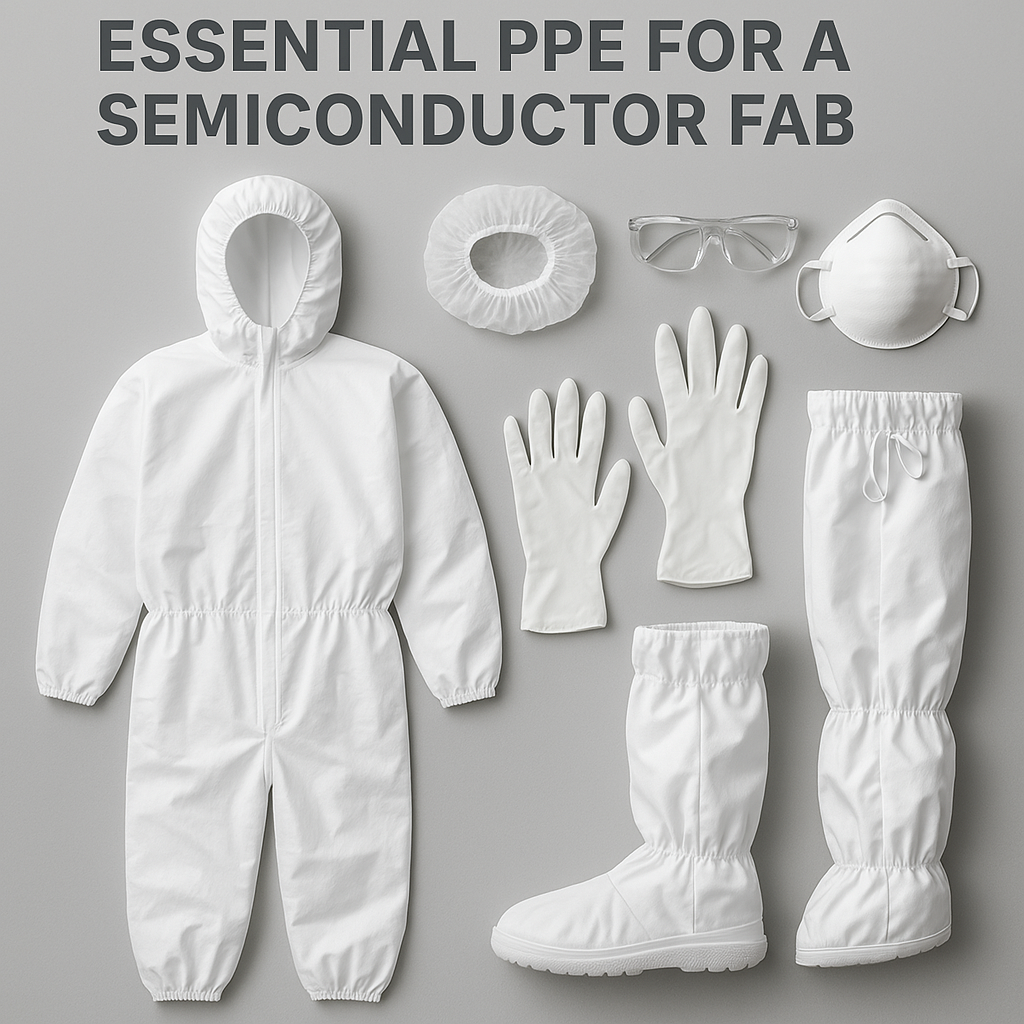
Personal Protective Equipment (PPE) is critical to ensure safety and compliance in the semiconductor manufacturing environment, particularly during tool hookup. Semiconductor fabs have stringent cleanliness and safety standards to protect workers and sensitive production equipment. PPE is the final layer in the hierarchy of controls, applied after elimination, substitution, engineering controls, and administrative controls, not as a substitute for them. Below is a guide to the essential PPE required for tool hookup operations.
Cleanroom Suit (Bunny Suit)
The purpose of the suit is to prevent contamination of the cleanroom environment and to protect sensitive equipment from particles shed by personnel, such as skin cells and hair. The full ensemble includes a full-body suit made of non-linting material, an integrated hood, booties, and cleanroom-compatible gloves. The suit must meet the cleanroom's ISO standards for particle filtration.
Gloves
Gloves are an important piece of PPE. They protect tools and the cleanroom environment from oils, moisture, and particulates on the hands, and they safeguard the worker against chemical exposure.
Several types of gloves are suitable for the cleanroom, including nitrile gloves and chemical-resistant gloves such as neoprene or butyl rubber. Nitrile gloves are used for general handling, whereas neoprene or butyl rubber gloves are for handling solvents or corrosive chemicals.
Safety Goggles or Face Shields
Safety goggles and face shields protect workers' eyes from chemical splashes, fine particulates, and sharp debris. Ideally, the safety goggles will feature anti-fog and scratch-resistant lenses. Goggles are used for general tasks, and face shields are used for activities involving chemicals or flying debris.
Respirators
Respirators help prevent the inhalation of hazardous fumes, gases, and particulates released during the tool hookup process. The two most common types are N95 and P100 filtering facepiece respirators, both of which provide particulate filtration.
A respirator only works if it seals properly, which is why fit testing is required under OSHA 29 CFR 1910.134 before a worker uses one. Facial hair at the sealing surface prevents a proper seal and disqualifies the wearer from using a tight-fitting respirator. The respirator must also meet the cleanroom's standards.
Anti-Static Wrist Straps and Footwear
Anti-static wrist straps and footwear protect sensitive electronic equipment from electrostatic discharge (ESD) during installation and hookup. Wrist straps are grounded to the workstation, and conductive shoes or heel straps are used to dissipate static electricity.
Chemical-Resistant Aprons or Coveralls
Aprons or coveralls provide an additional layer of protection against chemical spills during tool hookup, particularly when handling solvents or corrosive materials. Key features include lightweight but durable material and resistance to the specific chemicals being handled. This additional layer is worn over the cleanroom suit when chemical handling is involved.
Hearing Protection
Hearing protection such as disposable earplugs or over-the-ear earmuffs protects against noise levels that can exceed safe limits. This is especially important in fabs with high-decibel equipment. Check the Noise Reduction Rating (NRR) of the protection selected against the noise levels in the work area.
Steel-Toe or Composite-Toe Boots
These types of boots protect feet from heavy objects, sharp tools, and accidental impacts. Features to consider include ESD-compliant materials and non-slip soles for cleanroom floors.
Head Protection
Head protection shields against falling tools or parts during tool installation or maintenance. Hard hats should be compatible with cleanroom standards and are required in areas with overhead hazards.
Training and Compliance
Workers must be trained on the correct use and disposal of PPE, including procedures for donning and doffing in cleanroom environments, and PPE should be inspected regularly for damage or wear. The items above are a baseline; workers must also comply with any additional PPE required by the fab's internal safety guidelines.
Proper PPE protects worker safety, maintains cleanroom integrity, and supports operational efficiency in semiconductor fabs. Always refer to the job site's specific safety protocols for tailored guidelines.